
Getting Your Garage Door Ready for Winter in Altha
The short answer: before you think about cold weather, undo what hurricane season did to your garage door. Months of humidity, afternoon downpours, and storm winds leave hardware rusted, panels swollen, and tracks slightly out of alignment. Fix that first, then handle the cooler, drier months with a lubrication and seal check. Here's the order that actually works.
Step 1: Assess the Storm Season Damage
By October, your garage door has spent months absorbing moisture and getting battered by wind-driven rain. Before you do anything else, walk the door top to bottom and look for:
- Rust spots on hinges, tracks, and the bottom of steel panels where water pooled
- Swollen or warped wood panels that no longer sit flush, especially if your door took on moisture during heavy storms
- Dents or scrapes on the tracks from debris blown around during high winds
- Loose fasteners on the track brackets — wind-load stress during storms can work screws loose even if the door held up fine
Catching this now matters because small rust spots left untreated through a damp winter turn into pitted metal and weakened hardware by spring. A wire brush, a rust-inhibiting primer, and matching touch-up paint handle minor spots. If you're seeing rust on the springs themselves or deep pitting on the tracks, that's a sign the hardware needs replacing, not just cleaning.
Step 2: Lubricate Before the First Cold Snap
North Florida winters aren't brutal, but Altha and the surrounding area do get real cold snaps, and metal hardware that's been swelling and contracting with humidity all summer tends to bind up once temperatures drop at night. Springs and rollers that were fine in August can start squeaking, sticking, or moving unevenly in December.
Use a silicone-based garage door lubricant — not WD-40, which washes out fast in humid climates — on:
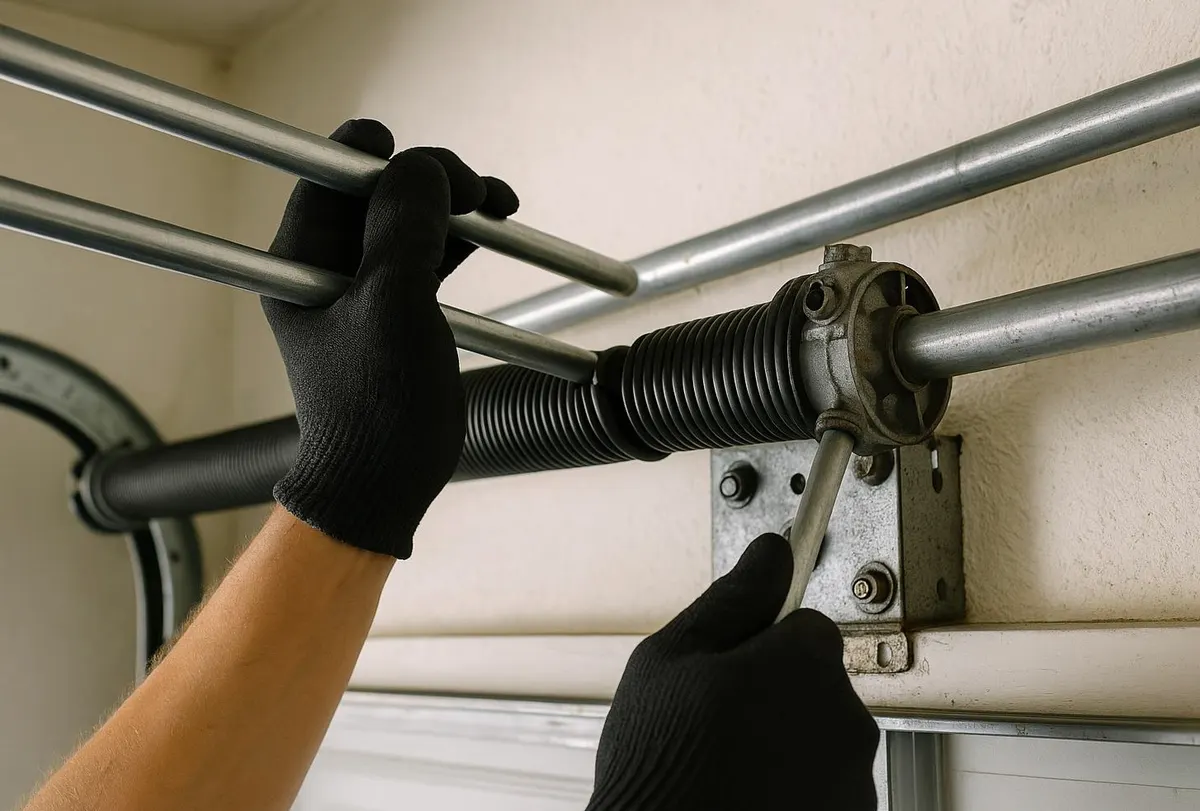
- Torsion or extension springs
- Roller bearings (not the rollers themselves if they're nylon)
- Hinges between panels
- The track where rollers ride
Work the door up and down a few times after lubricating so it distributes evenly. If you hear a grinding or popping sound that lubrication doesn't fix, that's usually a spring issue, not a lubrication issue, and it's worth having looked at rather than ignored through winter.
Step 3: Check Weatherstripping and Bottom Seal
Afternoon downpours taper off as the season turns, but moisture doesn't stop being a problem — it just changes form. Cooler nights mean more condensation inside the garage, and a bottom seal that's cracked, flattened, or pulling away from the door won't keep that moisture (or cold drafts) out.
Run your hand along the bottom seal and the side weatherstripping. If it's brittle, cracked, or you can see daylight gaps when the door is closed, replace it now. A new bottom seal is a low-cost fix that keeps both ground moisture and cold air out of a garage that doubles as workshop, storage, or laundry space for a lot of homes in this area.
Step 4: Test the Opener and Safety Sensors
Garage door openers take a quiet beating from humidity all summer — condensation inside the housing, swelling in the wiring connections, sensors that get knocked out of alignment by storm winds or debris. Before winter settles in:
- Test the auto-reverse safety feature by placing a block of wood in the door's path and closing it — it should reverse on contact
- Check that the photo-eye sensors near the bottom of the tracks are aligned (a blinking light on the opener usually means they're not)
- Listen for grinding, hesitation, or a motor that strains more than it used to — that's often early warning of an opener nearing the end of its life
If your opener has been acting up intermittently, a cooler, drier winter is actually the easier time to replace it than mid-summer storm season, since you won't be racing a storm to get it done.
Step 5: Do a Quick Balance Test
Disconnect the opener (pull the emergency release cord) and lift the door halfway by hand. It should stay in place on its own. If it drifts down or shoots up, the springs are out of balance — often from the stress of storm-season wind loads or just general wear. An unbalanced door puts extra strain on the opener motor all winter long, which shortens its life and can lead to a bigger repair down the road.
When to Call Altha Door & Opener
If your fall inspection turns up rust that's gone past surface-level, a door that won't stay balanced, or an opener that's clearly struggling, that's when it's time to bring in a professional rather than keep patching it yourself. We handle Garage Door Spring Repair for doors thrown off balance by storm-season wear, and our Garage Door Maintenance & Tune-Up service covers the full lubrication, hardware tightening, and alignment check in one visit — a good option if you'd rather have someone else run through the whole list above.
We serve homeowners throughout Altha, Blountstown, Bristol, Clarksville, Marianna, Wewahitchka, Hosford, and Sneads, and we've seen firsthand what a Calhoun County hurricane season does to garage doors by the time fall rolls around. If yours needs attention before winter sets in, give Altha Door & Opener a call — we'll get it sorted before the first cold morning catches you off guard.